
Skip to content
Extreme Citizen Science blog

Extreme Citizen Science blog

UCL's interdisciplinary research group on Extreme Citizen Science

  • Home
  • Articles
  • What is Extreme Citizen Science?
  • Interdisciplinary work
  • Website
  • Twitter

Category: Research project

Symposium on Biodiversity Resilience.Oxford University

As Prof. Shahid Naeem pointed out at the Biosymposium on Biodiversity Resilience held at Oxford University on the 2nd and … More
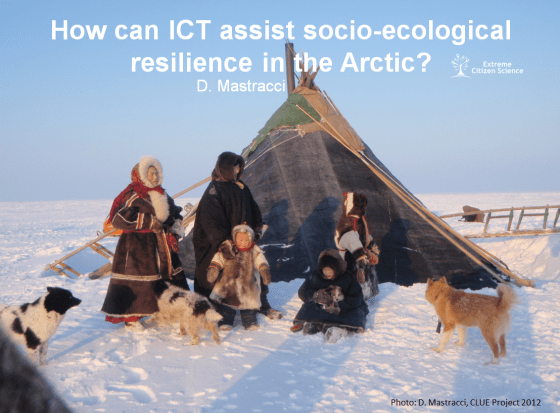
Arctic, biodiversity, ICT, resilience, socio-ecological systems

Motivations and Engagement in Citizen Science by Dr. Charlene Jennett

 Motivations and Engagement in Citizen Science Post by Dr. Charlene Jennett One of our goals in Citizen Cyberlab is to … More

Citizen science, creativity, motivation, public engagement

From Online Papers to Tags to Word Clouds!

How does the Citizen Cyberlab annotated bibliography work? Post by Cindy Regalado and Diana Mastracci Our team at Extreme Citizen … More

Annotated bibliography, Citizen Cyberscience, Citizen science, creativity, education

Participatory Mapping in Congo-Brazzaville (Part 2): Usability experiments

Towards the last part of our field trip in Republic of the Congo and after eliminating most of the platform … More

Congo-Brazzaville, ExCite, mobile data collection, participatory mapping, Usability Testing

Reflections on the NOMAD workshop

Last month, the NOMAD team organised a workshop at the French Space Agency (CNES) headquarters. The aim was to link humanitarian … More

data collection solutions, ExCiteS, Humanitarian Data Toolkit, mobile data collection, NOMAD

Participatory Mapping in Congo-Brazzaville (Part 1)

Over six weeks from the end of March to the start of May 2013, five ExCiteS members – Julia Altenbuchner, Gill … More

Congo-Brazzaville, data collection solutions, ExCiteS, mobile data collection, participatory mapping

Does citizen science by itself provide an evidence for cultural ecosystem services?

While designing an interdisciplinary PhD research project I am exploring different domains. From one hand I am focusing on the … More

Citizen science, conceptual frameworks, environment, interdisciplinary phd

Anti-Poaching Application

Mobile technology, as a part of ICT, can support public participation in environmental conservation in the developing countries. Relatively cheap, … More
Android, Anti-Poaching, ExCiteS, Intelligent Maps, Mobile Phones

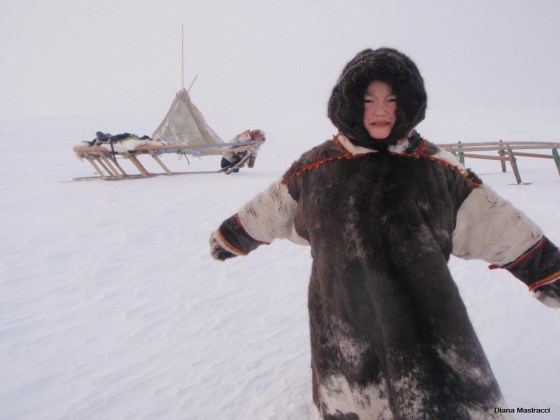
‘IF WE DON’T KNOW OUR LAND, WE’LL FREEZE!’

“Wow! There is nothing–just white!”  I exclaim whilst staring at the vast Russian tundra from the little window of the … More
Arctic, Nenets, participatory mapping, Russia

Science has no borders: real life DIY sensing and mapping techniques for environmental monitoring in London

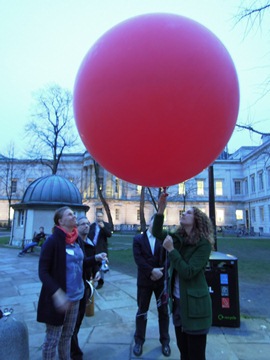
‘Science has no borders: real life DIY sensing and mapping techniques for environmental monitoring in London‘  is the title for … More

balloon mapping, Citizen science, Civic Science, DIY, environmental monitoring, Grassroots Science, participation, participatory tools, public engagement, Public Laboratory, sensing, thermal sensing

Posts navigation

Newer posts

Recent posts

  • IN.FOR.BIO – our new 6-year One Health project December 18, 2025
  • Indigenous floor maps and many names for ice: ICA Vancouver 2025 November 5, 2025
  • Reflections on Urban Gardening Workshop in London’s Chinatown November 16, 2024
  • A desert as a garden: The International Society of Ethnobiology conference in Marrakech, Morocco July 19, 2024
  • WhatsApp Maps? Connecting users and producers of ground information June 26, 2024
  • Pathways on Industry-connected Citizen Engagement September 20, 2023
  • Wisdom of the Crowd in the Age of AI: Water September 3, 2023
  • You are invited to attend – and participate in! – the HEIDI Project’s Final Event on 30th and 31st May May 18, 2023
  • Digital Services at HEIs to Support Digital Action for Social Change – A HEIDI short film May 11, 2023
  • From negative tipping points to positive tipping points January 30, 2023

Categories

  • Activism (8)
  • Agro-pastoralists (2)
  • Amazon (2)
  • anthropology (18)
  • Articles (197)
  • Biodiversity (12)
  • Brazil (4)
  • Cameroon (11)
  • Central African Republic (2)
  • Challenging Citizen Science (3)
  • Citizen cyberscience (5)
  • Citizen Cyberscience around the world (3)
  • Citizen Cyberscience Summit (13)
  • citizen science data (9)
  • Congo (7)
  • Crowdsourcing (3)
  • Cultural Ecosystem Services (6)
  • Digital Earth (3)
  • DIY tools and methodologies (16)
  • East Africa (2)
  • Ecological Citizen Science (7)
  • Ecology (8)
  • Engagement (15)
  • Engagement, motivations and incentives (10)
  • Fieldwork (13)
  • Food security (3)
  • Geographical Citizen Science (2)
  • HCI (1)
  • Human-Computer Interaction (12)
  • ICT4D (3)
  • Indigenous peoples (18)
  • Issues of power (4)
  • Land Administration (1)
  • Land use (2)
  • Learning (19)
  • Machine learning (2)
  • Mapping (18)
  • motivations and incentives (4)
  • Open Science (5)
  • Participatory GIS (4)
  • Reflection on practice (6)
  • Research project (18)
  • Science by Citizens (12)
  • Social events (7)
  • Social media (2)
  • STS (3)
  • Sustainable development goals (3)
  • The art of Citizen Science (1)
  • The Citizens of Citizen Science (3)
  • Webinar (2)
  • WhatsApp (3)
  • Workshops and conferences (31)

Archives

Where are you visiting us from?

Locations of visitors to this page
Website Powered by WordPress.com.
  • Subscribe Subscribed
    • Extreme Citizen Science blog
    • Join 140 other subscribers
    • Already have a WordPress.com account? Log in now.
    • Extreme Citizen Science blog
    • Subscribe Subscribed
    • Sign up
    • Log in
    • Report this content
    • View site in Reader
    • Manage subscriptions
    • Collapse this bar
 

Loading Comments...